Yet, within just a few seconds, viewers instinctively feel whether the image looks comfortable, balanced, and easy to understand—or awkward, cramped, and visually tiring. This reaction is not accidental. It is largely determined by how the screen ratio of the display interacts with the content shown on it.
In commercial display applications, screen ratios influence far more than aesthetics. They affect how information is perceived, how long viewers stay engaged, and how effectively a message is delivered. Understanding screen ratios is therefore essential for anyone involved in digital signage, interactive displays, or professional display solutions.

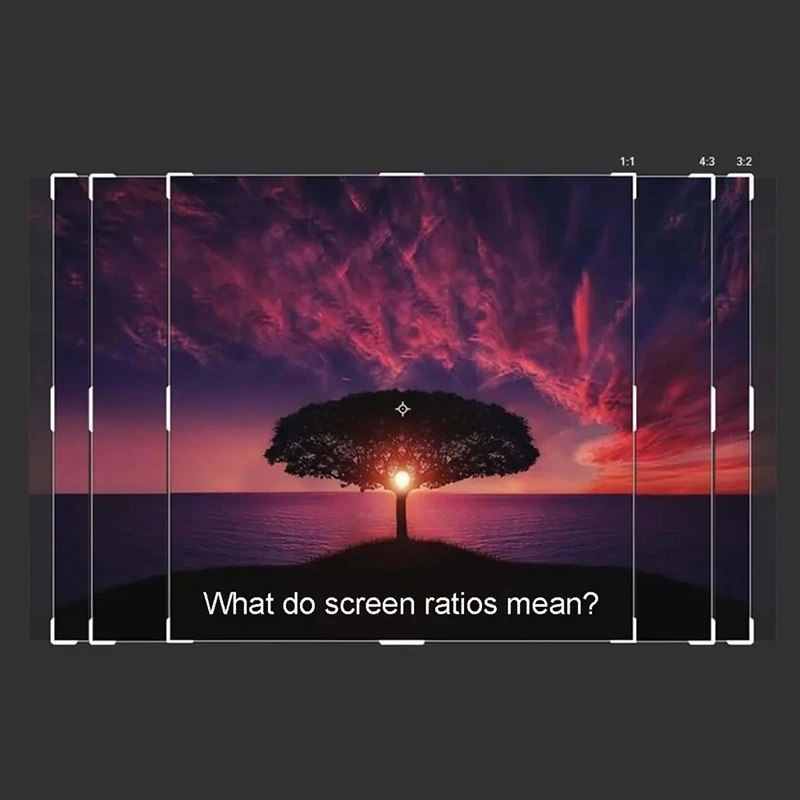
At its core, a screen ratio—also called an aspect ratio—describes the proportional relationship between a screen’s width and height. Rather than measuring physical size, it defines the shape of the display.
For example, a 16:9 screen is significantly wider than it is tall, while a 4:3 screen appears more compact and square. Even before any content is displayed, this ratio already sets boundaries for how images, text, and video will appear.
In everyday life, screen ratios quietly shape almost every visual experience we have. Television programs, mobile phone videos, cinema screens, advertising posters, and digital billboards all follow specific ratios. Designers do not choose these proportions randomly. They do so because the ratio directly influences composition, readability, and viewer comfort.
When content and screen ratio are well matched, information flows naturally. When they are not, viewers may experience black bars, cropped images, stretched visuals, or a sense that something simply “doesn’t look right.”
Screen ratios have evolved alongside display technology and changing user habits.
Dominant in early digital displays, ideal for text-heavy content, matching traditional photo and print formats.
Global standard for HDTV, streaming, and digital signage, enabling immersive multimedia experiences.
Used in cinema and gaming, offering an expanded field of view for premium visual experiences.
For control rooms and multi-screen setups, allowing simultaneous viewing of massive information.
Each ratio exists because it serves a specific purpose. None is inherently “better” than another; the effectiveness depends entirely on application and context.

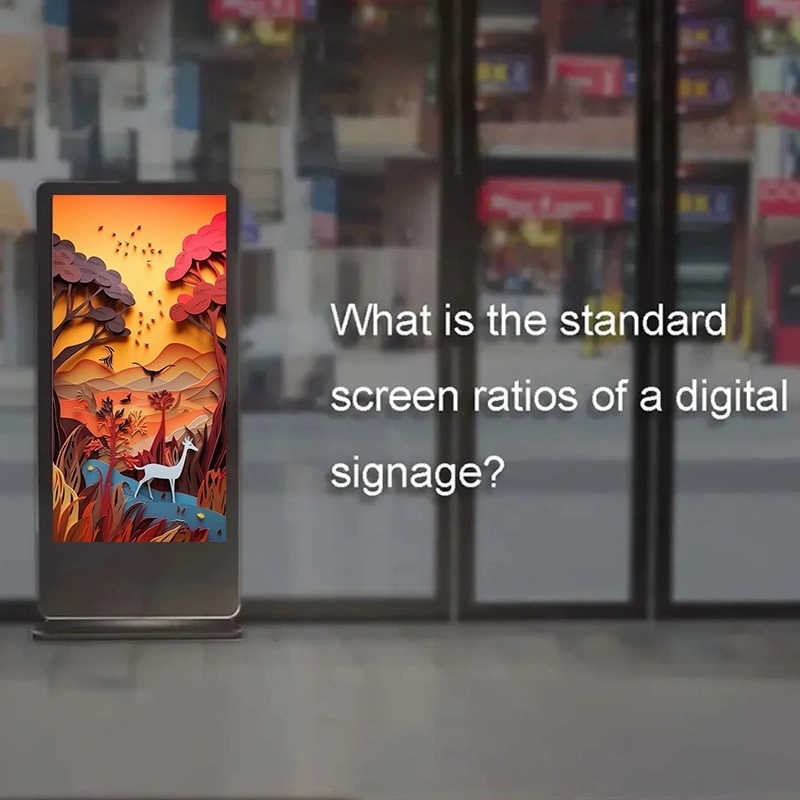
Unlike consumer TVs, digital signage does not follow a single universal standard for screen ratio. This is because digital signage is used in a wide variety of environments, each with its own physical constraints and communication goals.
Indoor digital signage in retail stores often uses 16:9, as it aligns well with video advertisements and branded visual content. Window-facing displays may use portrait-oriented ratios to better fit narrow spaces and attract foot traffic. Outdoor LED signage can adopt custom ratios depending on architectural design.
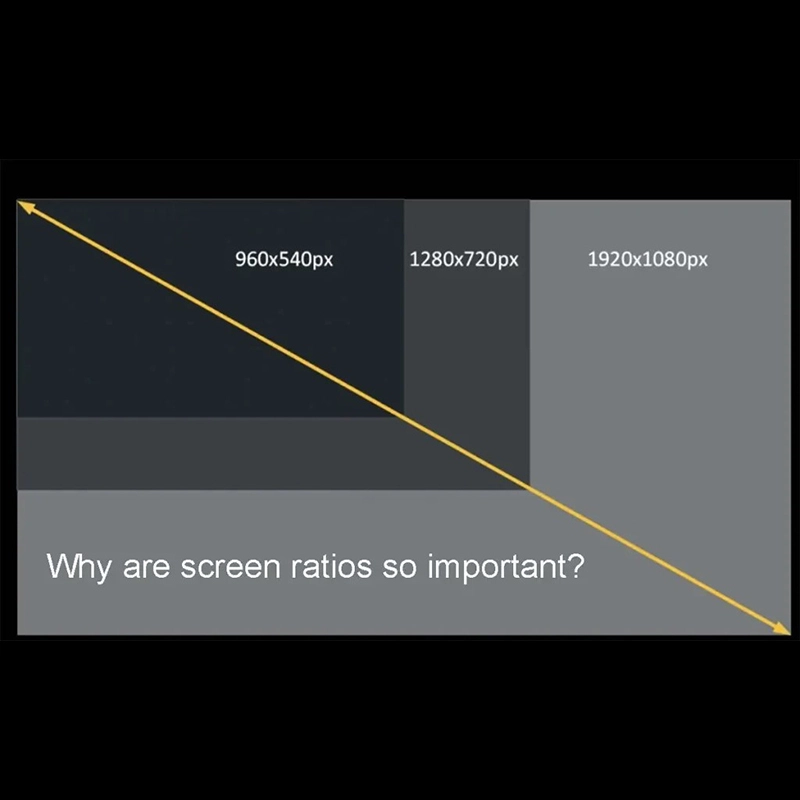
Problems arise when content is created without considering the display’s native ratio. For example, placing 16:9 promotional content on a 4:3 screen can result in cropped visuals or unreadable text. Conversely, stretching 4:3 content across a widescreen display can distort branding and reduce professionalism.
This is why professional display manufacturers emphasize the importance of matching content design with the physical screen ratio from the very beginning of a project.

Human vision naturally prefers balanced compositions. Screen ratios influence how the eye moves across an image and how easily information is processed.
Wider ratios often feel more immersive and relaxed, especially for video playback. Narrower ratios can feel more focused and structured, making them suitable for text-based or information-dense content.
When ratios are mismatched, viewers may feel subtle visual fatigue—even if they cannot consciously identify the problem.
Different types of content demand different visual spaces. Promotional videos benefit from widescreen formats that allow storytelling and motion. Product posters and informational graphics often perform better on more compact ratios where text remains prominent.
In commercial environments, clarity is everything. If a message cannot be understood at a glance, it loses its value.
Modern display ecosystems rarely consist of a single screen. Businesses may use a mix of interactive displays, digital signage, kiosks, and video walls.
Choosing appropriate screen ratios ensures that content can be adapted across multiple devices without constant redesign. This consistency reduces operational costs and improves brand coherence.

Selecting the right screen ratio is not a purely technical decision—it is a strategic one.
Start by evaluating the type of content you plan to display. Static images, motion graphics, live video, and interactive interfaces all have different spatial requirements. Next, consider the installation environment. Wall space, viewing distance, and audience flow all play critical roles.
Finally, think long-term. As content strategies evolve, flexibility becomes increasingly valuable. Displays that support multiple ratios or orientations offer greater adaptability.
This is where working with an experienced manufacturer becomes important.
In real-world commercial projects, businesses rarely want a one-size-fits-all solution. They need displays that adapt to space, content, and future needs.
Qtenboard designs and manufactures professional display solutions ranging from compact 8-inch screens to large-format 110-inch displays, covering a wide range of screen ratios and use cases. Whether for interactive education, corporate collaboration, retail signage, or customized commercial installations, flexibility is built into the product design.
By offering multiple sizes, aspect ratios, and interface options, Qtenboard helps customers avoid the common pitfalls of ratio mismatch and content incompatibility. This approach ensures that visual communication remains clear, consistent, and impactful across different environments.
Rather than forcing content to fit the screen, the screen is designed to support the content.
Screen ratios may seem like a technical detail, but they play a defining role in how information is seen, understood, and remembered. From viewing comfort to content clarity and device compatibility, the impact of aspect ratio reaches far beyond simple dimensions.
For businesses investing in digital signage and professional displays, understanding screen ratios is a crucial step toward maximizing return on investment. Choosing the right ratio—and the right display partner—ensures that content is presented exactly as intended.
As display technology continues to evolve, screen ratios will remain a foundational element of effective visual communication. With flexible solutions and a deep understanding of commercial display requirements, manufacturers like Qtenboard help businesses turn screens into powerful communication tools.
Click to read the product details and learn about its functional features and actual performance.
📖 Read Product